
Most people assume that when their insurance company sends a settlement check, that number represents what their policy actually owes them. It’s a reasonable assumption. It’s also wrong often enough that it’s worth examining before you cash that check and move on.
Insurance companies are businesses. Their adjusters work from standardized pricing software that frequently underestimates real-world repair costs—particularly in a market like New York City where labor and materials run significantly higher than national averages. Depreciation gets applied aggressively. Damage categories get missed or minimized. Exclusions get cited on claims they don’t legitimately cover. None of this is accidental. It’s a system that produces conservative settlements, and the assumption built into that system is that most policyholders won’t know the difference or won’t push back.
Some don’t. This post is for the ones who do.
How To Tell If Your Claim Was Underpaid
There’s no single signal. Underpayment shows up in different ways depending on the type of loss and how the claim was handled. But there are patterns that appear consistently enough to be worth knowing.
The most straightforward indicator is a gap between the insurer’s settlement figure and what your contractor says the repairs will actually cost. If two independent contractors tell you the job runs $85,000 and the insurer’s estimate comes in at $52,000, that gap doesn’t exist because the contractors are wrong. It exists because the insurer’s pricing doesn’t reflect what work actually costs in your market.
Beyond the top-line number, look at how the estimate is built. Are materials priced at rates any New York contractor would laugh at? Are damage categories simply absent from the estimate—interior finishes, HVAC components, contents losses, mold remediation connected to the water event? Is depreciation being applied to items on a policy that’s supposed to pay replacement cost value? Each of these is a form of underpayment, and they add up quickly.
Also look at what the adjuster’s inspection didn’t include. Insurance adjusters are working multiple claims simultaneously after a significant loss event. Inspections get rushed. Hidden damage behind walls, under flooring, inside ceiling cavities—damage that requires more than a visual scan to detect—gets missed. An estimate built on an incomplete inspection is an incomplete estimate, and the insurer isn’t going to volunteer to redo it.
The Depreciation Game: Actual Cash Value Versus Replacement Cost
One of the most reliably confusing aspects of a property insurance settlement is how depreciation works—and how it’s sometimes applied in ways that benefit the insurer far more than the policyholder.
Actual cash value coverage pays you the depreciated worth of what was damaged or destroyed. A roof that’s fifteen years old doesn’t get paid out at the cost of a new roof. It gets paid at the value of a fifteen-year-old roof, which is a fraction of replacement cost. For older properties with older systems, ACV settlements can come in dramatically lower than what repairs actually require.
Replacement cost value coverage is supposed to fix that problem—paying what it actually costs to repair or replace damaged property with materials of like kind and quality. But many RCV policies have a catch: the full replacement cost isn’t released until repairs are completed and receipts are submitted. The initial payment comes out at ACV, and the holdback—the recoverable depreciation—gets released afterward.
A significant number of policyholders never collect that holdback. They take the initial check, start repairs, and don’t know to go back to the insurer with documentation to claim the balance. If you have a replacement cost policy and your claim has been settled, check whether recoverable depreciation was withheld and whether you’ve collected it.
Denied Claims: What The Letter Actually Means
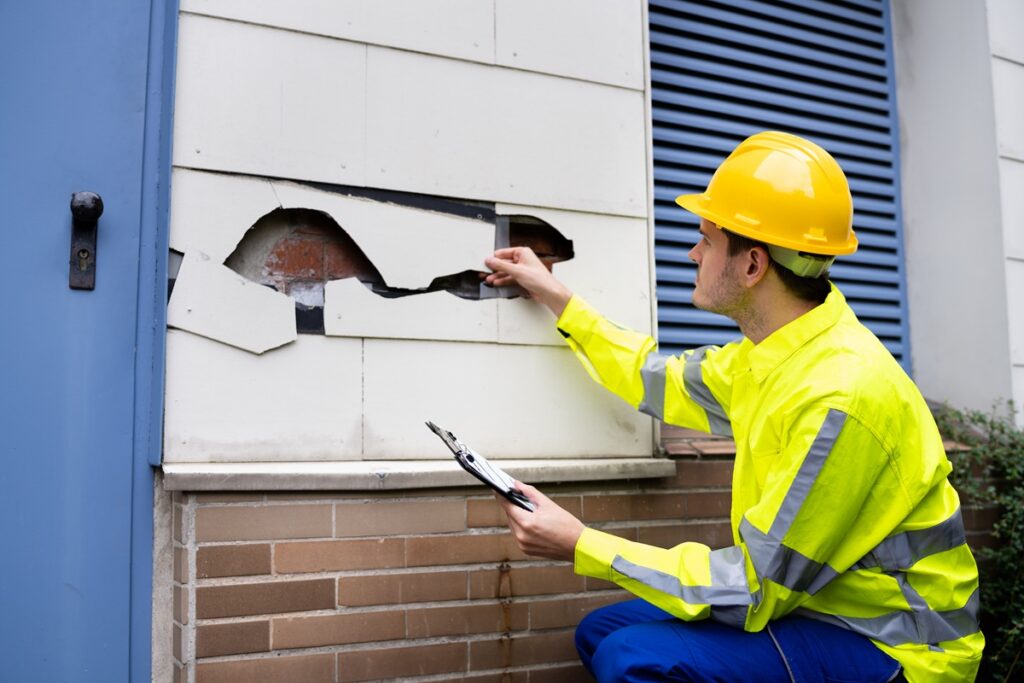
A denial letter is not a final determination. It feels like one—it arrives on official letterhead, cites specific policy language, and is written in a way that communicates finality. But a denial is the insurer’s position, not an immovable fact.
The first thing to do with a denial letter is read the specific exclusion or policy provision being cited as the basis for the denial. That language is what gets examined. Insurers sometimes cite exclusions that don’t accurately apply to the circumstances of the loss. They sometimes characterize the cause of loss in a way that triggers an exclusion when the facts support a different characterization. They sometimes conduct inadequate investigations and reach conclusions that better documentation would contradict.
In New York, a formal denial triggers rights. You have the right to a written explanation of the denial. You have the right to request the insurer’s complete claim file. You have the right to submit additional documentation and request reconsideration. And you have the right to invoke dispute resolution mechanisms within your policy—including the appraisal clause—without going to court.
None of those rights disappear because the insurer said no. They exist precisely because insurers say no to claims they shouldn’t.
The Appraisal Clause: The Option Most Policyholders Don’t Know They Have
Almost every property insurance policy written in New York contains an appraisal clause. It’s usually buried somewhere in the conditions section, written in language dense enough that most people skip over it. But it’s one of the most powerful tools a policyholder has when a claim dispute reaches an impasse.
Here’s how it works. When you and your insurer can’t agree on the amount of loss—not whether coverage applies, but how much the covered loss is worth—either party can invoke appraisal. You appoint a competent independent appraiser. The insurer appoints one. The two appraisers agree on a neutral umpire. The panel evaluates the loss and issues an award. If two of the three agree, that award is binding on both parties.
It doesn’t require a lawyer. It doesn’t require litigation. It moves faster than a lawsuit and costs less. And it regularly produces awards significantly higher than what the insurer’s adjuster offered—because the process removes the insurer’s adjuster from the equation and replaces them with independent evaluators who aren’t working from the insurer’s pricing software.
The catch is that invoking appraisal requires knowing it exists and understanding the procedural requirements under your specific policy. Miss a step and you may waive the right. If you’re considering appraisal, having someone experienced guide that process matters.
Bad Faith: When Underpayment Crosses A Line
There’s a legal concept in insurance called bad faith, and it’s worth understanding even if it doesn’t apply to every underpaid claim.
Bad faith occurs when an insurer unreasonably denies or delays a claim, fails to conduct a proper investigation, misrepresents policy provisions, or applies exclusions it knows don’t legitimately apply. It’s not simply a low settlement offer—low offers happen and are often worth fighting without rising to the level of bad faith. Bad faith is about the insurer’s conduct in handling the claim, not just the outcome.
In New York, bad faith claims carry potential remedies beyond the policy limits themselves. An insurer found to have acted in bad faith can face damages that go beyond what they owed under the policy. That’s a different legal process than a standard coverage dispute—one that typically involves an attorney rather than a public adjuster—but the two processes can and do run simultaneously.
If you believe your insurer didn’t just underpay your claim but actively mishandled it—delayed without reason, denied without investigation, cited exclusions they knew didn’t apply—that distinction is worth raising with someone who can evaluate it properly.

The Timeline Problem: Why Waiting Is Dangerous
New York insurance law gives policyholders two years from the date of loss to bring a legal action against an insurer. That sounds like a long time. It isn’t, once you factor in how long it takes to realize a claim was underpaid, gather documentation, retain representation, and build a formal dispute.
Some policies contain shorter contractual deadlines—as little as twelve months from the date of loss in some cases. Courts have upheld these shorter windows, which means a policyholder who waits to see if the insurer comes around can find themselves time-barred from pursuing a legitimate dispute.
The clock also doesn’t pause while you’re negotiating. If you’ve been going back and forth with your insurer for six months and the conversation isn’t moving, those six months count against your deadline. Getting a formal review done sooner rather than later is not just strategic—in some cases it’s the difference between having options and not having them.
What A Public Adjuster Does In An Underpaid Claim Situation
A public adjuster is a licensed professional who works exclusively for the policyholder—not the insurer. In an underpaid claim situation, their role is to build an independent assessment of what the loss actually cost, identify what the insurer’s estimate missed or undervalued, and negotiate directly with the insurer from a position of documented evidence rather than the policyholder’s word against the adjuster’s.
They work on contingency. There’s no upfront cost and no fee unless they recover more than what you’ve already been offered. That structure means a public adjuster’s incentive is aligned entirely with getting the highest possible settlement—because that’s the only way they get paid.
If the dispute reaches appraisal, a public adjuster can serve as your appraiser or work alongside one. If the claim involves a denial rather than an underpayment, they can build the documentation package to support a formal challenge. If the situation involves potential bad faith, they can identify the evidence that an attorney needs to evaluate that separately.
You Don’t Have To Accept What You Were Offered
An insurance settlement that doesn’t cover what your repairs actually cost isn’t something you have to live with. The system has built-in mechanisms to challenge it—appraisal, formal dispute, supplemental claims, re-inspection requests—and a signed settlement check isn’t always the end of the road either, depending on what was signed alongside it.
If your claim in New York was settled for less than it should have been, was denied on grounds that don’t hold up under scrutiny, or was closed before all the damage was properly accounted for—the underpaid claim team at Direct Public Adjusters will review your situation at no cost. No upfront fee, no obligation, no payment unless we recover more. Licensed in New York, New Jersey, Connecticut, and Pennsylvania, serving all five NYC boroughs.
The insurer had professionals working your claim from day one. It’s not too late to have someone working it for you.