
A house fire doesn’t just damage property. It scrambles everything at once—your living situation, your sense of security, and suddenly a phone call to your insurance company that you’ve never had to make before and have no idea how to navigate.
The claims process for fire damage is one of the most involved in residential insurance. There’s more documentation required, more moving parts, and more ways for a legitimate claim to get underpaid than almost any other type of loss. Knowing what to do—and what not to do—in the days immediately following a fire is the difference between a settlement that covers your actual losses and one that leaves you short when the contractor bills arrive.
The First 48 Hours Matter More Than Most People Realize
Before the insurance conversation even starts, there are things that need to happen in the right order.
Don’t re-enter a fire-damaged property until the fire department has officially cleared it as structurally safe. This isn’t a formality—ceilings collapse, floors fail, and electrical systems remain dangerous long after flames are out. Get written clearance before anyone goes back inside.
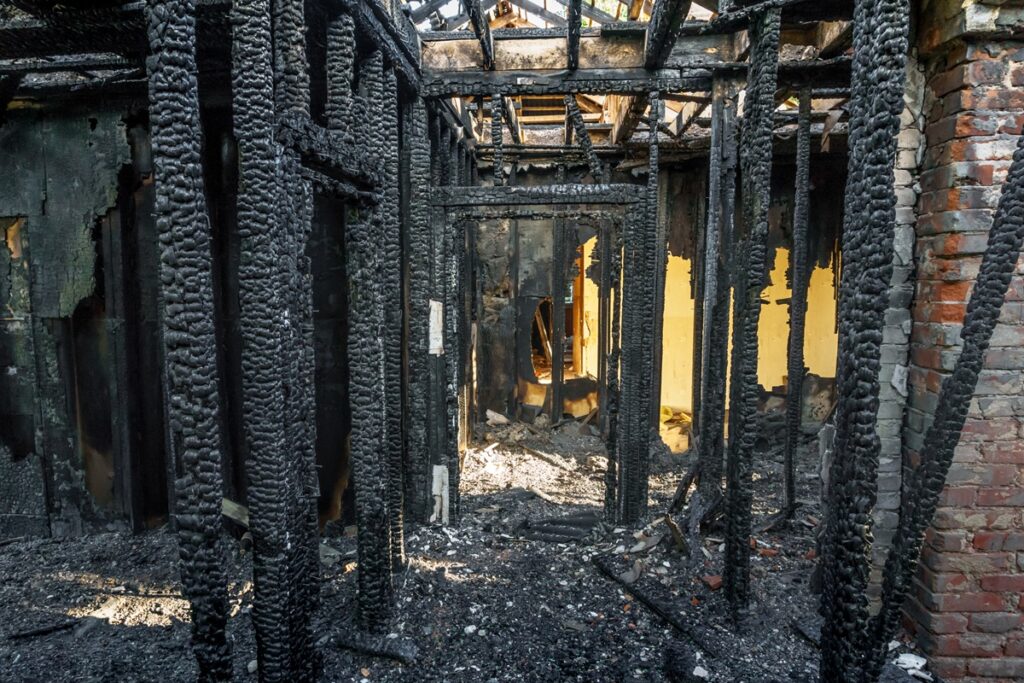
Once it’s safe, document everything before a single item is moved or a single surface is cleaned. This is the most important thing you will do for your claim. Fire and smoke damage is visceral and obvious in the moment, but restoration crews work fast. Within days, a professional cleanup team can transform a scene that clearly showed total loss of contents into a space that looks manageable—and insurance adjusters write their estimates based on what they see, not what a photograph shows them existed three days earlier.
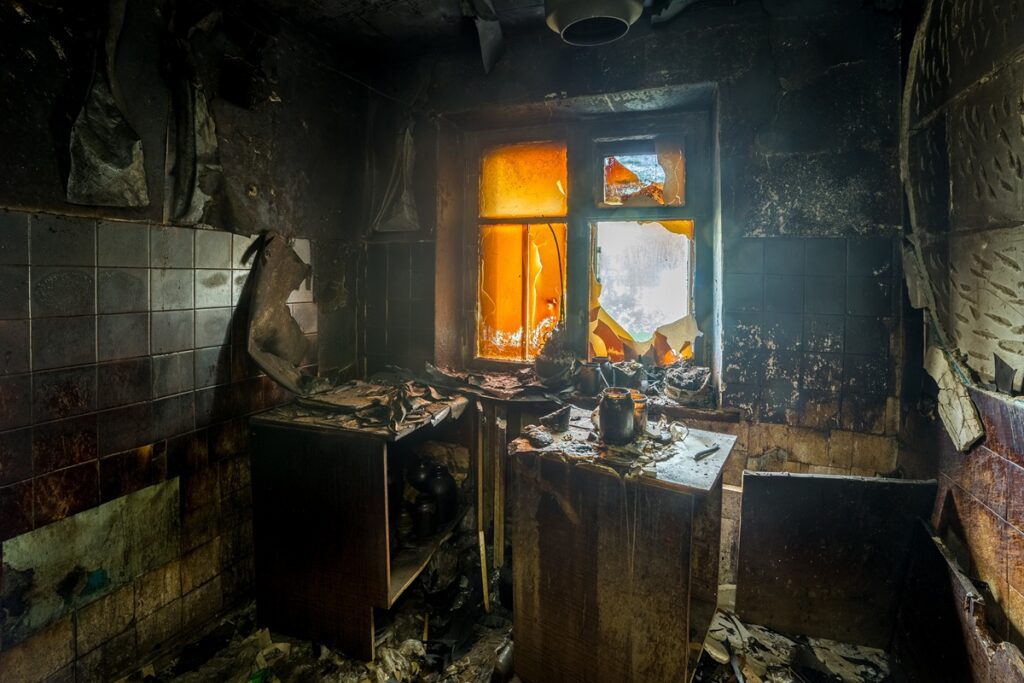
Film every room. Every wall, every ceiling, every floor. Open cabinets and closets and film inside them. Get close-up footage of melted fixtures, charred structural elements, smoke-blackened surfaces, and every item of personal property that was damaged or destroyed. If serial numbers or model information are visible on electronics and appliances, capture that too. The more specific your documentation, the harder it is for the insurer to argue the scope of loss was smaller than it was.
Make a written inventory of everything that was damaged or destroyed while it’s still in front of you. Furniture, clothing, electronics, kitchen equipment, tools, anything of value. Write down what it was, approximately what you paid for it, and when you bought it. Don’t wait until later—memory is unreliable and the insurer is not going to build that list for you.
Reporting The Claim And What To Expect Next
Call your insurance company to report the loss as soon as the immediate emergency is under control. Get a claim number, write down who you spoke to, and note the time and date of the call.
Keep the initial conversation factual and brief. You’re reporting that a fire occurred, the date it happened, and the address of the property. That’s all you need to cover in the first call. Don’t give a detailed account of what happened, don’t speculate about the cause of the fire, and don’t agree to provide a recorded statement during that initial conversation. A recorded statement comes later, and it’s worth preparing for carefully before you give one—what you say shapes how the insurer characterizes the cause and scope of loss.
Your insurer will assign an adjuster. They’ll also likely recommend a restoration company. You’re not required to use the company they suggest. You have the right to choose your own contractor, and in many cases an independent contractor will give you a more accurate assessment of what the repair actually costs in the current New York market.
Understanding What Your Policy Covers—And What It Doesn’t
Fire damage itself is a covered peril under virtually every standard homeowner and commercial property policy. What varies significantly is how much gets paid, which depends on the type of coverage you have and how the claim is documented.
The most important distinction for most policyholders is replacement cost value versus actual cash value. Replacement cost coverage pays what it costs to replace damaged items and materials at today’s prices. Actual cash value pays the depreciated worth of what was lost—so a ten-year-old sofa doesn’t get paid out at what a new sofa costs, it gets paid at what a ten-year-old sofa is worth, which is often very little. Many policies are written with ACV as the default and only convert to replacement cost once repairs are completed and receipts are submitted. Know which one you have before you’re deep into the settlement conversation.
Smoke damage is covered under the same policy that covers fire—it doesn’t matter whether the smoke came from your unit or a neighboring one. Smoke penetrates walls, ductwork, flooring, clothing, and upholstered furniture in ways that aren’t always immediately visible, and initial insurer estimates routinely underestimate the full scope of smoke remediation required. Push back if the smoke portion of your estimate looks thin.
Additional living expenses coverage—written as ALE in most policies—covers the cost of temporary housing, meals beyond your normal food budget, laundry, storage, and similar necessities while your home is being repaired. Keep receipts for everything from the day you’re displaced. These costs are reimbursable but only if you document them. Insurers will question anything that looks excessive, so reasonable and documented is the standard to hold yourself to.
The Adjuster Inspection: Go In Prepared
The insurer’s adjuster will schedule a time to come inspect the property. Be there. Walk with them through every area of damage and don’t assume they’ll find everything on their own—because they won’t, and that’s not entirely accidental.
Point out damage that isn’t immediately obvious to an untrained eye. Smoke infiltration into wall cavities and HVAC systems. Water damage from firefighting efforts, which is often as destructive as the fire itself and just as compensable. Structural elements that look intact but were compromised by heat. Any area where the visible surface damage understates what’s happening underneath.
If you’ve already had a contractor walk through the property, bring their written assessment to the inspection. If the adjuster’s estimate comes back significantly lower than your contractor’s, that gap isn’t something you have to simply accept.
The Settlement Offer Is A Starting Point, Not A Final Answer
When the insurer’s written estimate arrives, read every line. Compare it against your contractor’s assessment. Look for materials priced at rates no New York contractor would actually work for. Look for damage categories that are absent from the estimate entirely. Look at how depreciation has been applied—on a replacement cost policy, heavy depreciation in the initial offer is sometimes used to lowball the first number with the expectation that many policyholders won’t push back.
You can submit your own contractor’s estimate as a counter. You can request a re-inspection. If the dispute is significant and neither side is budging, the appraisal clause in your policy gives you a formal mechanism to resolve it without going to court—each side appoints an independent appraiser, they agree on a neutral umpire, and the panel issues a binding decision. Most policyholders don’t know this option exists. Most insurers don’t volunteer it.
Commercial Fire Claims Deserve Their Own Attention
If the property is a business rather than a residence, the claim is considerably more complex. Structural damage, equipment and inventory loss, business interruption, and potentially multiple policy layers all come into play simultaneously. The financial stakes are higher and the documentation requirements are more demanding.
Commercial fire claims are where the gap between what an insurer initially offers and what a policyholder is actually owed tends to be the largest. Having experienced representation on your side from the beginning—not after the claim has already been partially settled—makes a measurable difference in outcomes.
When The Claim Isn’t Going The Way It Should
Some fire damage claims get denied. Some get settled at numbers that don’t come close to covering what was lost. Some policyholders sign a release before they fully understand what they’re giving up, only to discover additional damage later that the settlement didn’t account for.
If your fire damage claim has been denied, underpaid, or you received an initial offer that doesn’t match what your contractor says the repairs will actually cost—the fire damage claim team at Direct Public Adjusters will review your situation at no cost. No obligation, no upfront fee. We’re licensed in New York, New Jersey, Connecticut, and Pennsylvania and work across all five NYC boroughs. If we recover more than what you’ve been offered, that’s when we get paid.
The insurer’s adjuster has done this hundreds of times. You probably haven’t. That experience gap is real, and it shows up in settlement numbers.